I tried using a very weird little class-d + Bluetooth amp I've used for awhile in the lab coupled with an ancient but durable pair of Realistic bookshelf speakers (Minimus 7?) but for some reason this amp doesn't sound right with the Soundburger. The setup sounded good with a Bluetooth source, but when playing a record something was up with the high-end. I thought maybe it was some kind of interaction between the amp's line-level input and the 'burger's built-in preamp so I added a buffer in the form of an old mixer I had handy. This helped, but it still was a bit off and added a lot more hardware to the system than was needed.
I would normally consider a vintage amp/receiver for this, but since the Soundburger doesn't need a phono stage and Bluetooth input is desirable I more or less skipped this option (I did find some interesting Carver's on Ebay but they were in need of repair and I need something that works yesterday). So I went shopping for something new and after looking at a lot of disappointing and often expensive options, I stumbled upon the Fosi Audio MC331.
I've never auditioned any Fosi gear before, and I've heard a number of small, cheap, class-d hybrid tube amps that sound like the tubes are just for decoration so I was suspicious that the MC331 was just another one of these. But after a couple hours of reading reviews and digging-up technical details (as well as becoming more familiar with Fosi's reputation) I decided it was worth giving the amp a shot.
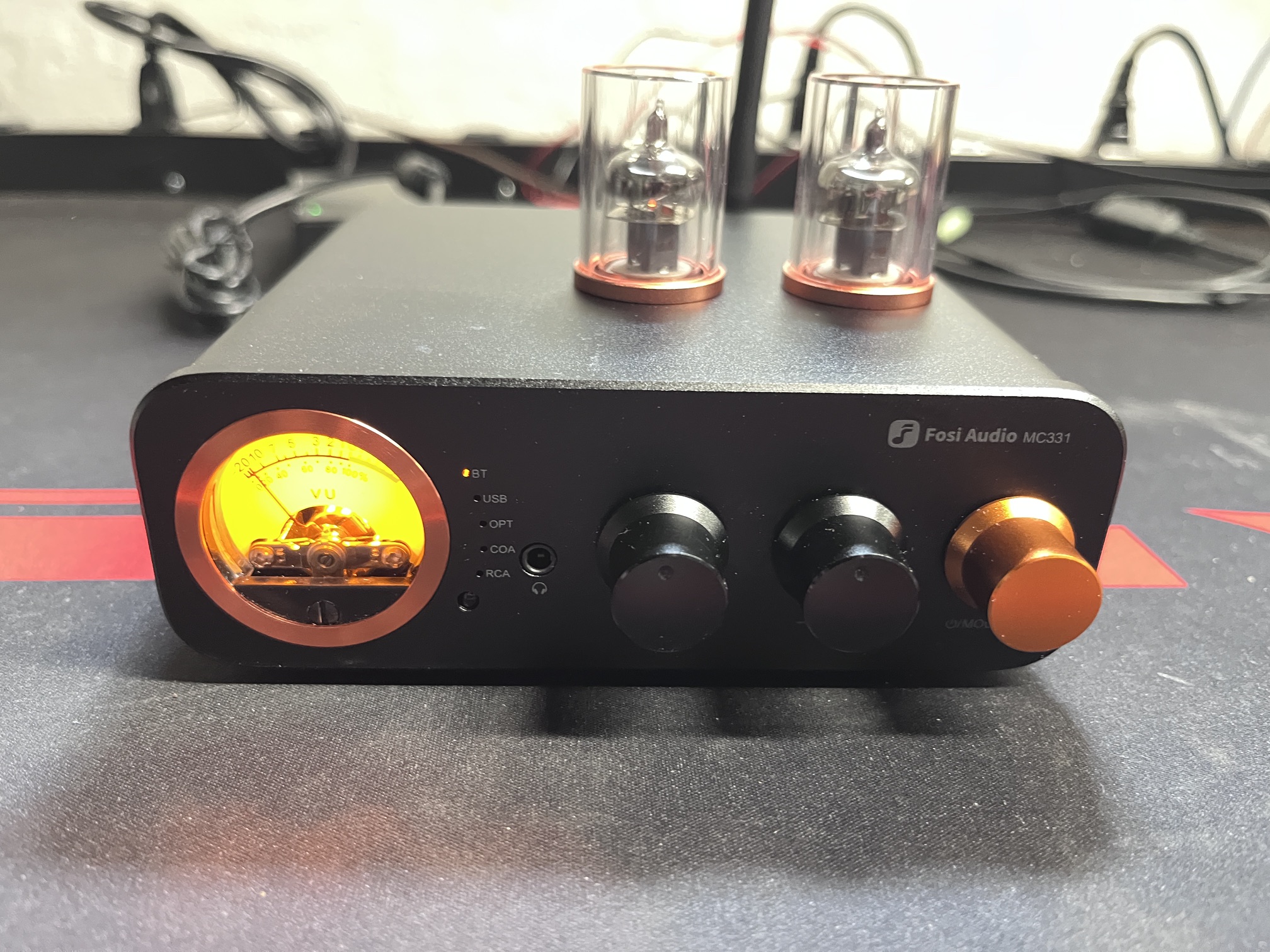
When it arrived I was immediately impressed with the build quality of the little amp. I've used a number of small class-d power amplifiers and while some have sounded quite good, they have all been rather flimsy, delicate things. The Fosi is small but substantial, much heavier than expected and that's something considering that the power supply is external to the chassis. I worried that it would squirm when I tried to adjust the knobs or would get pulled-around when I attached some cables to it but after hefting it in my hand those concerns disappeared.
Setting up the amp consists of little more than connecting the usual input and output cables and power supply with the addition of socketing the tubes. It was a little funny to me that this felt just like working with tubes on an amp from 50 years ago (I guess I thought maybe tube base/socket tech had advanced some since then).
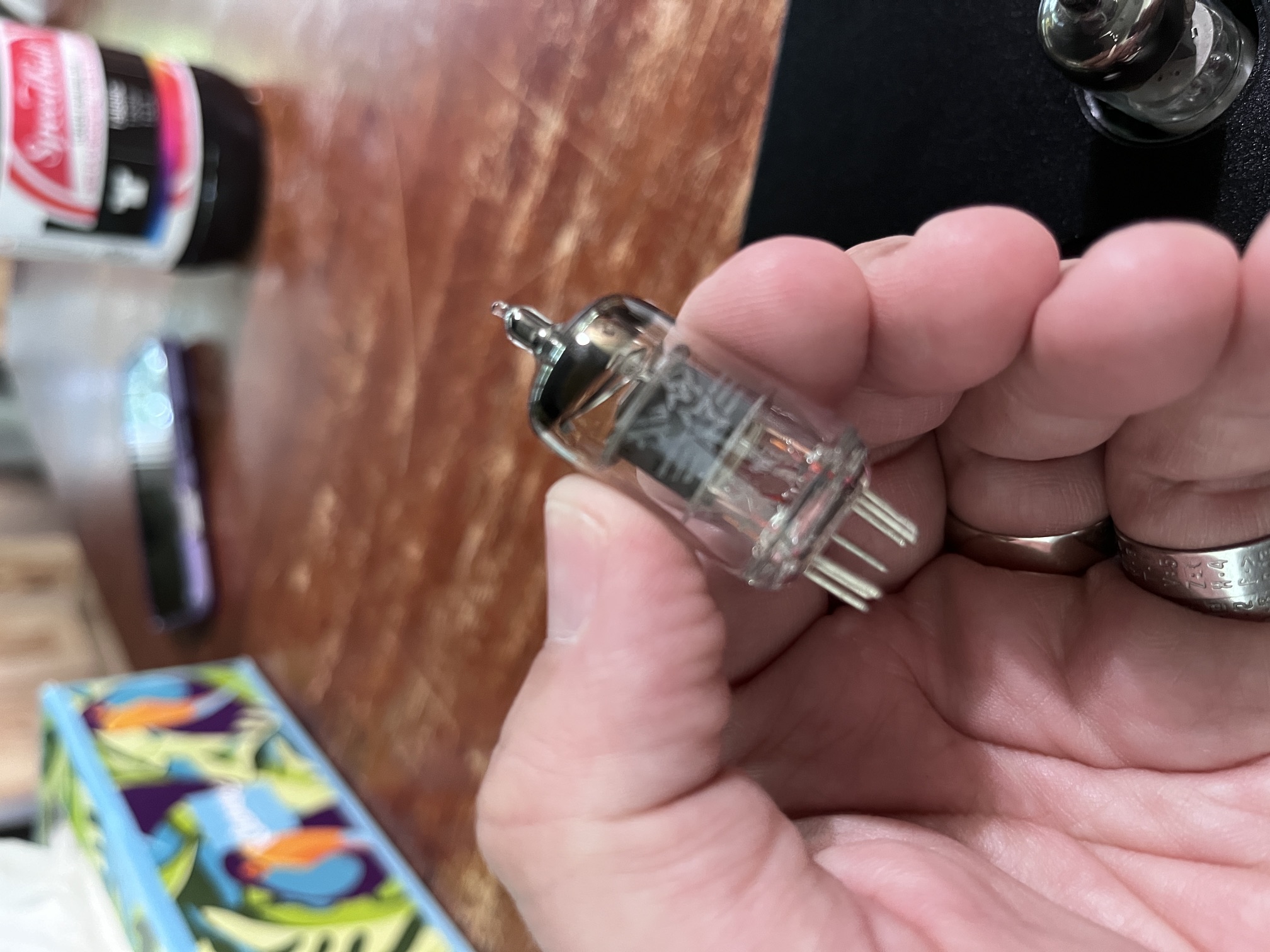
Once the tubes were carefully seated I connected the amp to a pair of baby Advents I restored a couple years ago and put it through it's paces with a short but diverse set of music using the Bluetooth input.
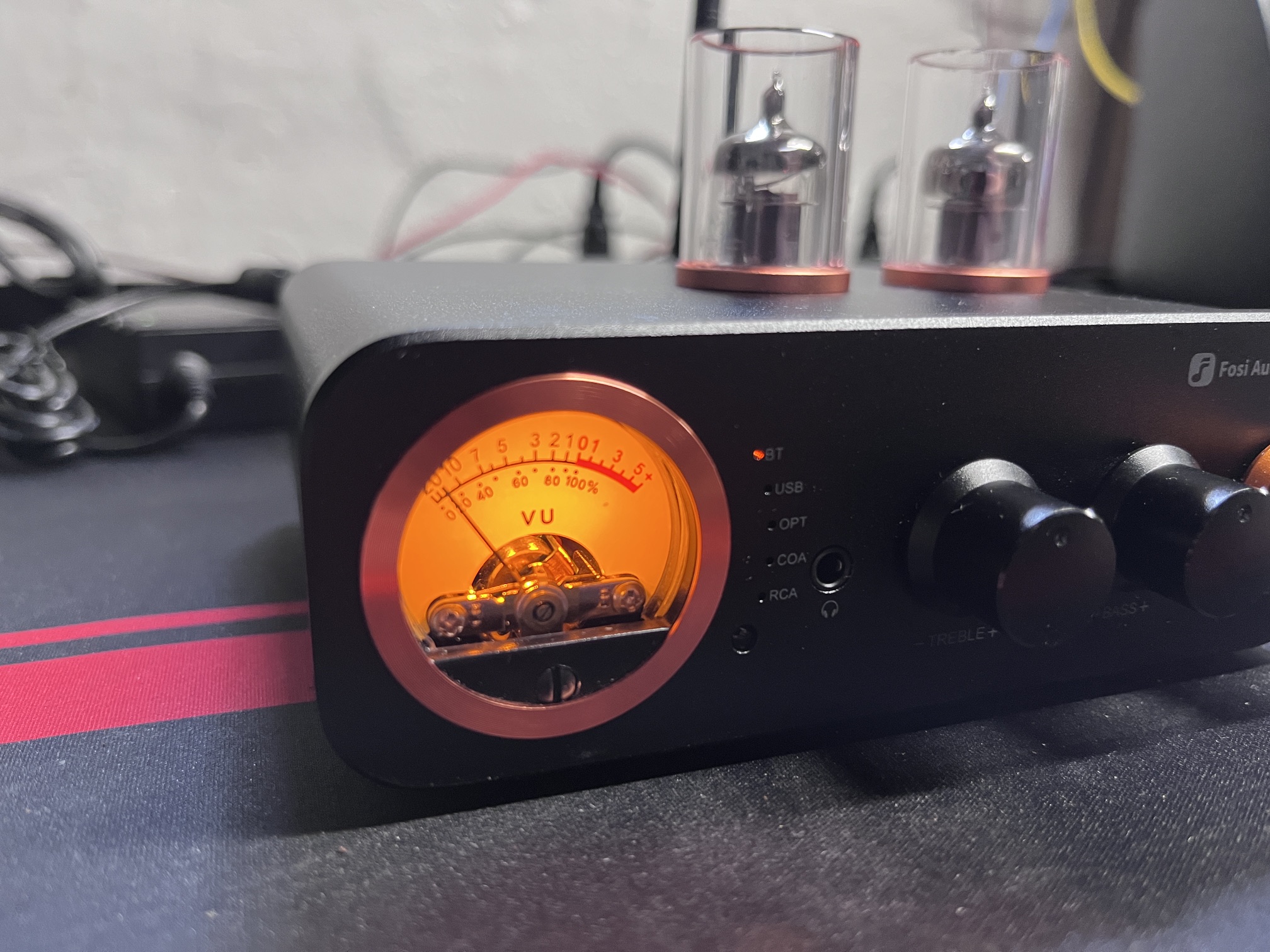
Not only is the VU meter cool, it's practical and accurate as well.
I was really impressed with how well the amp drove these speakers. Being sealed they can be a little power hungry but the little Fosi outshined any other amp I've used with them in terms of loudness. The quality of the sound was excellent as expected in the mids and highs but I was even pleasantly surprised by the amount of bass kick the amp could summon from the Advents when I cranked-up the Bass knob.
After this initial test I carefully (the tubes are exposed) packed-up the amp and took it down to the print shop to see if it would solve the problem I've been having with the Soundburger. I'm happy to report that it did, and even coupled with the smaller, cheaper Realistic speakers it sounds damn good.
This alone makes the MC331 worth the (surprisingly low for a tube amp!) price. There's a lot more to like about it (wide-range of input types, remote control, preamp out, etc.) but all that is covered by other reviews and the owner's manual. The only thing I might add is a subwoofer to add some kick to the little Realistics, but with a larger set of bass reflex speakers that probably wouldn't be necessary. That said, I'd love to see Fosi offer this same hybrid configuration with a 2.1 power section and/or a dedicated subwoofer output from the preamp.
If you're in the market for a nice sounding amp for a desktop system or small room I highly recommend the MC331. I'm probably going to pick one up for my work desk at home and use the USB-C input with my work computer so I can use a cord with my headphones instead of having to either listen to music over Bluetooth or switch back-and-forth when I have to take phone calls.
Jason J. Gullickson, 2026